29

Welcome to PS&W: The Introduction to My Blog

When I was fresh out of college and starting my writing career at a magazine in New York, I will never forget a particularly lovely spring afternoon in which the editor of the magazine invited me for lunch to discuss my latest article. I thought it was a good piece I had written and was expecting some praise. Instead, he proceeded to dissect the article, explain why it was so bad, why I would never be a writer, and what other careers I should think about.

This of course shocked me. But instead of thinking of myself, I couldn’t help study the man who was saying this. He was downing one gin and tonic after another, in the middle of the afternoon. The following image came to me, one I remember to this day as vividly as ever: this man was like a house that looked okay from the outside, but on the inside, all of the beams and supports were rotting and termite infested…from alcohol, from his own sad life. I also had the feeling that maybe some twenty years earlier another editor had given him the same ugly talk, and it worked, and so instead of being a writer, he turned into a dried-up editor, full of regrets. His way was not to help others avoid the same mistake, but to do the opposite.

… Continue Reading

7

The Robert Greene Interview, Part 1

This is a three part interview by Tucker Max that will serve as the introduction to Power, Seduction and War: The Robert Greene Blog.

About two months ago Mark Ebner, of Hollywood, Interrupted, called me up. He was either smoking or out of breath, and I couldn’t really understand what he was saying until I heard this sentence:

Ebner “Do you know who Robert Greene is?”

Tucker “Are you kidding? He’s one of my heroes, I read his books like they are scripture.”

Ebner “He wants to a do a website, you interested in talking to him about it?”

I’ll be honest: I nearly shit. Starting with 48 Laws of Power and culminating with his new book, 33 Strategies of War, Robert has had as much influence on my life as any other writer, living or dead, and here I was, not only with the chance to talk to him, but maybe even publish his site. Mark gave me Robert’s email address, and I immediately spent something like three hours crafting an email to him, and began the process that has culminated in this site.

I sat down with Robert at a coffee shop in Santa Monica and did this interview over dinner, not as a reporter or as the publisher of this site, but as a fan. If you have read any of Robert Greene’s books, when you finish you are probably left asking yourself, “Who is the guy who wrote this book? What kind of mind thinks like this? What is he like?” That is what I tried to explore with this interview; more about the man behind the books that are so influential to so many people.

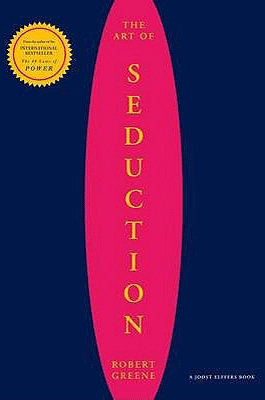
Tucker Max: 48 Laws of Power has sold over 700,000 copies and continues to sell well [ed note. It was published in 1998, and still stands as one of the top 100 selling books on Amazon]. The Art of Seduction sold 200,000 copies and still moves units, and 33 Strategies of War will pass 100,000 in sales soon. What does it feel like to be on the brink of selling 1 million non-fiction books, an almost unheard of feat for a modern writer, especially considering that you don’t have some other PR vehicle like a radio or TV show, and don’t get all that much mainstream attention?

Robert Greene: It’s a little bit unreal and a little bit abstract because its just a number, so I’m not completely impressed by the numbers. I am impressed when I go on the internet and see a lot of young people who’ve been influenced by the books, or I meet someone who tells me how it has changed their life. To me, that is much more real than sales figures. When I discover that the books have seeped into the culture and are having an effect, that really excites me. I believe that everything happens for a reason, and what seems bad at first might in fact be something of a blessing. The fact that I have had so little mainstream coverage, not a single real book review for 33 Strategies of War for instance, means that the book spreads by word of mouth, not hype, or the ephemeral tastes of some critic. One person reads the book, and cannot help telling a friend. That is vastly superior to any kind of advertisement, or clever magazine article. That is also the great power of the internet, where people share their opinions without the annoying screen of the media, and so much of the presence of my books has come from the Internet. It’s a new era, a new form of war, and I embrace it.

TM: Beyond mere sales, your books–especially 48 Laws–are constantly referenced in other texts and across the spectrum of media, from hip-hop to business to high culture, and have become must reads for an entire generation of successful people. Do you ever wonder about your impact on society or your place in history? Do you ever stop and think about the fact, like the way you reference great thinkers in history, that people in the future can potentially treat your books the way you treat someone like Machiavelli? What does it feel like to know that the next generation of writers, myself included, are growing up on you?

RG: My greatest wish is that a certain way of looking at the world, a way I show in all of my books, gets into my readers’ heads, and slowly alters their perception. I wrote about this power in chapter 30 of the WAR book, in dissecting the influence of Machiavelli. Such an impact is impossible to measure, but it is there, and it is the reason I write. The ideas get under your skin. I am honored and deeply excited by the thought that the next generation of writers, or whomever, are influenced by these books. I often daydream about the future, thinking of the world in 100, 200 years, imagining what it looks like, feels like. I hope that my books are like ghosts that will inhabit this future.

TM: How did you get into writing about power, seduction and strategy? Is this something you’ve always been obsessed with, or did it come about accidentally and you just went with it?

RG: If you met my mom you’d know that I’ve been doing this since I was about five or six years old. There were two things going on: on the one hand, when I watched sports or read about war, I tended to focus on strategy, on why somebody won, how was that pitcher psyching out the batter, etc. On the other hand, I was keenly aware that so much in life is appearances, that many people pretend to be something they are not. I got a pleasure out of examining what they were really up to, what was their game, as opposed to what they said they were doing. I loved being ruthless in my analysis of people, as ruthless as Ali would be in the boxing ring. So strategy and these subjects have been a life long obsession of mine. Then in 1995 I met this guy, Joost Elfers, the future producer of my books, and he asked me if I had any ideas for a book and I recognized that this was my grand opportunity in life, because Joost is a real smart person and a man who gets books published. I pitched to him an idea about the timelessness of Machiavelli which ended up turning into the 48 Laws of Power. It was a mix of luck and seizing the moment and now once the 48 Laws happened I have been able to write about the other things that interest me like seduction, like war, etc.

TM: I have read your newest book, The 33 Strategies of War, and I loved it. In fact, I read it three times straight, where I would literally finish and turn right back to the front and start again. My copy is all underlined and worn out already. I cannot recommend it highly enough to people, and I even think it’s the best thing you have ever written. How do you think 33 Strategies holds up against your other work, and what has been the general reaction to it?

RG: Well, it was the hardest of the three to write. I wanted to create something new and to say something profound about strategy, which to me is a really exciting subject. And so, I would read about a campaign of Napoleon over and over again, and I would say to myself–what is the essence of Napoleon’s mind? What made him brilliant? What allowed him to think in the moment, to outsmart his enemies? And those are the answers and the secrets I believe I supply in WAR. In ways, it is kind of the source for the other two books, even though it came afterward. It is like the master recipe of strategy, from which power or seduction flow. And what I wanted to capture was these timeless patterns in war that reveal something about our psychology and character. The counterattack, for instance, a strategy that I find incredibly beautiful if executed correctly. What is the essence of the counterattack? Why does it work so well? And how can you use this brilliant strategy in your every day life? The book, as you know, goes beyond military war, to talk about your mind and the war going on in your head. True genius, in strategy or anywhere, lies in self-control, self-mastery, presence of mind, fluidity of thought. I analyze that endlessly in the book. And of course, I arm the reader with endless strategies on how to face off with all the a-holes, passive aggressors, and manipulators who populate this world. The last part of the book is a primer on unconventional, or dirty war.

Nothing makes me happier than to hear from readers that they think this is the best of the three, because it was such a bitch, such a mind puzzle, and I worried that I was not making myself clear enough. The reaction from readers has been even more positive than the other two. The reaction from the media is hard to gage. Very little coverage in the press. The book is too weird and different for many. But like the other books, over time, it will seep into the culture and something will take root. In any event, the book is selling real well. I don’t care what the press says or writes, I only care about my readers have to say. And I hope that in this forum I can hear from you directly and exchange ideas.

TM: Power, Seduction and War is your first serious foray into the internet and the world of blogging. Why did you decide to start a site? What will you be writing about?

RG: To me, so much about life and power comes down to control. The problem with the mainstream media is that they control the game and to play on their terms you end up at their mercy. What I like about the internet, what I see there is that its much more democratic. I have much more control, and if what I write is liked by the public, I have immediate feedback. There are so many things I want to say–about events in the news, politics, the gamesmanship and manipulations I read about, thoughts that occur to me about the power game, advice, on and on. But in the past, every time I wanted a forum to do this, outside of my books, I had to jump through the hoops of the media, and beg for their attention. This is my chance to bypass all of that and go straight to my readers, interact with them, share my ideas directly and apply my ruthless perspective on the world in a more immediate format.

TM: One of the main critiques that people make of you and your work is that it is either amoral, immoral, or both. How do you respond to these critiques?

RG: The book isn’t immoral, I say that it’s amoral. I think that power is beyond good and evil, as is seduction, as is warfare. They can be used for good or bad purposes. We happen to live in an era that is incredibly wrapped up in notions of political correctness; everything is seen through the lens of politics. But being political and politically correct is just another way of fighting, another form of power and strategy, an insidious means of manipulation. Everybody in life is struggling for power, and some people use morality and righteousness as a weapon, while others use different means, even passive aggression. From a distance, we are all fighting, and I am looking at this from a distance.

The reason I think some people like my books is that I tell it as it is. They recognize that some of their colleagues and rivals are shifting for power, being manipulative, even deceptive. It has been that way forever. Let us not moralize about this, or try to wish it away. It is human nature to want power and to try almost anything to get it. Let’s be adults and analyze it. This is the power game, what you are going to encounter in Hollywood, in the work world, in the music world, in politics, in the office. Here it is, you can do with it what you want. One other thing I wanted to mention is that the people who whine the most about the immorality of my books are often the most manipulative people I’ve ever met.

TM: The other main critique I have read is that some people say you contradict yourself in your books with some of the laws. What is your response?

RG: Yes, I hear that. For instance, in the 48 Laws, there is a chapter that says court attention at all costs. Then I have another chapter that says use absence to create honor and respect. An apparent contradiction, only if you think in terms of strict formulas for getting power, advice that tells you to do this and do that. But I adhere to a much higher form of strategy that asks you to think in the moment, to adapt what you are doing to the situation. Sometimes, especially when you are starting out in life, it is more important to court attention at all cost, following P.T. Barnum’s idea that no attention is bad attention. But if you are powerful and already famous, that strategy might make you look weak and desperate. Sometimes, for a leader in the public eye, it is best to disappear a little, to create some mystery around you and get people to talk about you because of your absence. People who want everything to be consistent and formulaic never get far in life. Such a way of thinking is so mechanical and rigid, the opposite of my approach.

TM: I know if you are anything like me, you must deal with a lot of misinterpretation of your work.

RG: You can’t really help the fact that people are going to bring their own weirdness and insecurities and issues to what you write. There’s nothing you can do about that and you’ve got to let it go, you can’t take it personally. I’ve noticed that the people who get the most upset about the 48 laws really have something going on in their past. A parent or lover was very manipulative to them. Or they are people who want power but cannot be honest about this to themselves so they operate unconsciously. They bring their own issues to my books and project all kinds of evil things on them that are not there. I can live with that.

TM: The basic structure of all three of your books is that you take the wisdom and experiences of the great thinkers through history, and distill them into easily understandable ‘laws’ and ‘strategies.’ Do you consider your books to be works of original thought, works of synthesization, or somewhere in between?

RG: I consider my works original thought, for better or worse. Yes, I am building upon the great wisdom of the past, but there is more to it than that. There is this knowledge and understanding from writers such as Machiavelli, Gracian, Nietzsche, Musashi, on and on. Such thinkers have come upon elemental truths about human nature. I use these as building blocks. But I am also changing the context, reinterpreting their ideas, making them relevant, making these writings of the past come to life in the present. I don’t ever copy what they are saying. A chapter in 48 Laws on the Mirror Strategy, or in Seduction on Effect a Regression, or in WAR on applying the death ground strategy to life, these are completely my own creations.

Part Two of the The Robert Greene Interview is here

2

The Robert Greene Interview, Part 2

This is Part 2 of 3 of the interview between Tucker Max and Robert Greene. Part 1 can be seen here.

TM: Who are your favorite five strategic thinkers?

RG: Obviously I’d have to say Napoleon Bonaparte, I consider him the greatest strategist who ever lived. I call him the Mozart of Warfare.

Then I’d have to say somebody like Sun Tzu. We don’t know much about him personally; it seems he was a general of some sort. But his book has had such an impact on strategy that you are forced to ask why–why do people still read Sun Tzu. It is because he has hit upon truths, almost natural laws of war and strategy.

I’d have to rank as one of my personal favorites Miyamoto Musashi who I used a lot in 48 Laws and in 33 Strategies because Musashi was a weirdo and I like weirdos. He was also a strategic genius and he was creative. He wasn’t one of these people who just memorized some way of doing things and repeated it. He was always in the moment, fluid, bringing his individuality, his own way of doing and thinking into his swordfights. He made his own character part of the strategy. Quite a genius.

If we are sticking to the realm of warfare I think Hannibal was one of the greatest military strategists who ever lived. The guy was just unbelievable. He was so inventive, he never did anything you would expect and when you expected the unexpected then he would do the expected, which was unexpected. He had an incredible sense of humor, his soldiers loved him and he had balls. I love these characters throughout the history of war who don’t give a damn, who don’t go by the book.

On an organizational level, I would rank Genghis Khan up there. He transformed the loose Mongol association of tribes into the greatest fighting force mankind has ever witnessed. A form of mobile warfare that has been studied to death and influenced such operations as Desert Storm. Speaking of which, I would also have to include a personal favorite of mine, Colonel John Boyd, inventor of the OODA loop, and whose writings and thoughts on strategy had a great impact on Desert Storm. I personally like him because he was a maverick and a guerrilla fighter in the battles of life. Strategy infused every one of his actions. I guess that’s six. Hard to pick just five.

TM: So your favorite is Napoleon–what puts him above the others?

RG: He had this period of ten years, 1796 – 1806, where he was involved in almost constant warfare, one campaign after another, and he won them all. And this for a man who was young, and relatively inexperienced as a leader. An unprecedented ten years in warfare, but he not only defeated the opposition, he absolutely obliterated and annihilated them and not because of superior technology or numbers, but because of superior strategy. What was great about Napoleon was that he had a feel for war so he could be in the midst of a very chaotic battle where something went wrong, where everything went wrong, and if you know warfare at that period, it was incredibly chaotic and unpredictable. He would never lose his cool, he had an incredible presence of mind and he was able to think in the moment. His philosophy in life, one I ascribe to, was to say that nothing that happens is bad, or worth despairing. Everything that seems bad contains the seed of the opposite, an opportunity, a turnaround. He was the supreme opportunist. So in a battle like Austerlitz, which is probably the greatest battle of his career and my favorite, everything went wrong, and it looked like he was going to be crushed–he was surrounded, he was in the worst possible position. And he turned that into his greatest victory ever by playing upon his opponent’s arrogance and over confidence. I think that’s genius, to never lose your cool, because things are always going to go bad or wrong and anybody would wilt under that pressure and this man, Napoleon, not only did not wilt, he was at his best.

TM: Who of those currently alive, really gets strategy? What politician or public figures do you think you could have potentially included in your books?

RG: I don’t know, its hard to say. History is so weird and people we think are brilliant now might be forgotten in a few years. Like Clinton, he’s an interesting politician, a man with genuine charisma, but as a great strategist, I am not so sure. I’m personally fascinated by John F. Kennedy, whom I consider superior to Clinton on many levels. His campaign against Nixon in 1960 has to be considered one of the great achievements, and in many ways a blueprint for Democrats now.

In business, I’m fascinated by the two Google guys because I think they are playing the game in a very interesting way. They are able to adapt to the new order of things, to the chaos of our times, and they are very free flowing with their strategy. Under the category nefarious and manipulative, I would have to rank Karl Rove as a master of the dark side of power.

TM: If you can get George Bush elected twice, you must be smart.

RG: Of course it helps that he was facing two of the weakest candidates in modern history– Gore and John Kerry. Nonetheless, Rove is an interesting strategist and I often tell people that the Democrats are perhaps missing their own Karl Rove, maybe not so ugly, but certainly on his level of strategy. I would like to audition for the role. We shall see. At some point, I am going to break Rove down on this blog, analyze his strategic style, and anticipate his moves in the coming elections. It is a game of chess.

TM: You drew from most all of the great strategy texts to write 48 Laws and 33 Strategies, and did an amazing job of synthesizing and expanding their ideas. Yet, even though you are widely read, I can’t help but notice the conspicuous absence of The Meditations by Marcus Aurelius. Is there any particular reason you don’t give much time to what is considered one of the great strategic texts of history?

RG: On the level of generalship, I don’t consider him one of the greats. Among the Romans, I rank Scipio Africanus and Caesar as the two most interesting strategists.

TM: Granted, but Marcus Aurelius is considered one of the great leaders of western history and it was The Meditations that taught people like Napoleon and Winston Churchill how to lead.

RG: There’s only so much research I can do. I read Marcus Aurelius when I was in college. All I can say is that I messed up, you’re right–I should have included him in the 48 Laws. I’m reading him now thanks to you, because you inspired that [ed note. I had shown Robert these questions prior to the interview]. He had some amazing quotes, and one of my favorites is one in which he compares life to a boxing match: if the other guy hits you hard in the head, you don’t whine and complain and get all pouty and upset. That’s boxing, man. And that’s life as well. Somebody messes with you, plays a game on you, don’t get angry or upset or resentful. It’s just part of life, the brutal arena. Shut up and hit back. I wish I had included that quote in my first book, but it’s too late.

TM: What are your favorite books? In or out of the strategy realm, what do you read?

RG: In the strategy / political realm its Machiavelli, obviously, The Prince. Everything of Machiavelli, in fact, including his letters and his plays. What a mind he possessed. I love Russian novels–Dostoyevsky, Gogol, Bulgakov. And I read a lot of history. I recently read a book about Magellan that was really good called Over the Edge of the World. What a story! And then, Touching the Void, the ultimate mountain climbing saga. Too many books to mention at this point.

TM: I’ve made no it no secret that you are one of my literary heroes. Who are your literary heroes, i.e. what has influenced your style and who do look up to as a writer?

RG: There would be a couple of them, when I was in high school I went on this tear of reading Nietzsche and I read everything he ever wrote and he was probably the writer who had the biggest influence on me. He’s a little bit fancy, his writing is a little bit flowery but … he had a huge influence on me. Then a writer like Laclos who wrote Dangerous Liaisons was a hero of mine, combining my two great interests–strategy and seduction. When I was young, one of my favorites was Ralph Waldo Emerson. His essay on Self-Reliance is the greatest thing you could ever read for inspiration and insight. I would say the lack of self-reliance for any individual is the cause of misery and depression.

TM: What is the reaction to your work in the scholarly community? Do you get much traction there?

RG: No, not much. There have been a few universities that have used the Power book for instructional purposes. I know of a few professors scattered about who have their students read these books. As far as the scholarship is concerned no one has come up with any examples of me where I’ve messed up my research because I’m very meticulous about it. Its just that my way of using history is a little bit out of fashion, but I think its actually coming back into fashion. I’m kind of against the whole postmodernist / deconstructionist idea of history, which tends to devalue individuals, the accomplishments of great men and women and their influence on history. I happen to believe in the heroic school of history and that a man like Napoleon has had an inordinate impact on the world. This is not cool to the academics. But I could really care less.

TM: You’ve said before that you have a lot of anger. Where does that anger come from, what is the source of your rage? I’ve found that a lot of successful people are driving by something from their past, and that it is that unresolved issue that is really what drives them, not necessarily the goal in front of them, and you seem to be driven by that anger. What is the source?

RG: Well I noticed one thing when I’m writing that if I don’t feel that anger I don’t write very well. So even when I was writing all three books, particularly the first and the third I have to remind myself of something bad that someone did or something that I really hate, then my writing would get much better. You know, a lot of my issues happened when I was younger and I was quite idealistic about life and I was inevitably disappointed that people’s actions were not governed by ideas or doing the best job possible but were always bringing in politics, and by politics I don’t mean official, Congressional politics, I mean politicking in the office and it would really anger me that they would do something behind my back because they didn’t like me or because they were envious and they weren’t straight forward. This has accumulated over the years. I don’t mind if people do things that are bad or wrong, or evil, I do them myself. That is part of the nature of the human animal. But what I cannot stand are people who play righteous and moral, and use that as a kind of power. They are not honest about themselves. They cloak their manipulations with a cover of morality or selflessness. They make others feel guilty. They use passive aggression. That is what makes me angry. And I like feeding off that anger like a fire.

TM: Does the fact that all these people who used to stab you in the back or whatever, they’re still nobodies and you’re Robert Greene and you’ve sold a million books and are read by everybody, does that make it better?

RG: Yeah, it does. It is nice, to win in the end. But not everyone who messed with me was small. One person who messed with me was Bill O’Reilly, he’s still pretty big.

TM: What did he do?

RG: I was on his show for the 48 Laws of Power, he had me on twice and the first time he just loved me, “Oh you’re fantastic, I loved it, I want you on again,” that kind of stuff. And he totally set me up. I come on a second time and he just did a total number on me. Basically depicting me as a kind of Don Corleone of power. He got me to talk about Lyndon Johnson as a power player, then cut me off and said, and this was the man responsible for 50,000 young Americans dying in Vietnam, as if my book can be linked to such tragedies. A master of manipulation. But yeah, in the end having success is the best revenge. And I thank all of these people in the acknowledgments of the 48 Laws. They made the book possible, inspired it in fact.

TM: For many guys my age, until your book came along, reading Mario Puzo’s book, The Godfather was what helped us understand strategy. Why do you never talk about Vito Corleone? Is it because he is a fictional character?

RG: I read it a long time ago and…it resonated with me in the moment, but I just never went back to it. I have a feeling that unconsciously a lot of things in there ended up getting in the book.

Part 3 of the Robert Greene Interview can be seen here

10

The Robert Greene Interview, Part 3

This is Part 3 of 3 of the interview between Tucker Max and Robert Greene. Part 1 can be seen here, and Part 2 here.

TM: Do people approach you differently when they know you’re Robert Greene and they know your work? In negotiations or things like that?

RG: I haven’t been in too many negotiation situations. I let my lawyer handle that. But yes, in general people treat me very differently. They expect me to be hardcore, cynical, mean, a real asshole, but I’m not like that at all. When people who just meet me see that I am quite relaxed and low-key, they usually think that I’m putting on an act, that deep down, or behind the scenes I am vicious and amoral. These impressions can work to my advantage and disadvantage, but they are there and I am always aware of them.

TM: What about the women you date? If they have read Art of Seduction, do they treat you differently?

RG: Yeah, yeah and its not even women. If there’s an interview going on and I don’t call the person right back or maybe an hour later, they think I’m using a power trip even though I’m maybe stuck in traffic. I find with some women, they tend to be intimidated right off the bat. They think I’m Casanova, they think they have to be a siren; they have to be mysterious and either they try and stay away or they’re nervous. When I meet a women or anyone who can act normal around me I’m quite impressed and happy.

TM: I’m sure you must get approached for advice all the time. What is the weirdest or funniest story about someone coming to you for strategic or seduction advice?

RG: I do these one on one consulting things where I charge a lot of money. For a day of advice. Early on I had this guy who was an executive VP of a brokerage firm and he was pestering me with emails–he wanted to meet me for a day and I said alright. So we meet in New York and for several hours we’re talking business, and I am completely rearranging the next three years of his life, working to craft a grand strategic plan that if he follows, will bring him incredible power. Then, out of the blue, he changes the subject to this secretary in his office. He is trying to be clever and subtle, but I sense the real reason he has hired me is to give him killer advice on how to seduce this young woman. Then it comes out he is a real pickup artist, that’s his main passion in life, not stocks and bonds. He is also married, with children. And his wife knows about his affairs, and one more strike, and it’s over. I start thinking, I don’t want to give this guy the perfect advice on how to get this secretary, be the cause of his breakup, ruin his daughter’s life. I tell him about the 50 mile rule. I tell him to avoid this secretary, to get real distance, to not make such a stupid mistake. Then it hits me–he has already tried to seduce her, and if he ignores her like I am telling him to do, she will read it another way, and will fall for him as he pulls back. If she starts to pursue him then, he would fall for it, I was sure. In the end, after much hard work on my part, I convinced him to find another object of desire, to not mix business with pleasure. But it ended up being all we talked about.

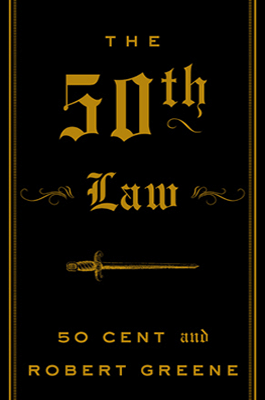
TM: Your work, especially 48 Laws, is very popular in the hip hop community. Kanye West and Jay Z both reference you in songs, and you are writing the foreword to 50 Cent’s next book. Why do you think this community is so drawn to your work?

RG: Its hard for me to say because I’m a white guy who grew up in fairly comfortable circumstances. But I think that for a lot of African Americans so much is stacked against them from day one, and the power games they witness are really brutal, very real, so that they have a crystal clear awareness about how this world operates. They are attracted to my books because I tell it straight; I am honest about the power game. For those who are involved in the music industry and who have ambition, the 48 Laws and the WAR book can be very helpful. There is nothing more Machiavellian and manipulative than the music business. For a lot of these artists, the game is about how to gain some control, some real power, long term power, as opposed to immediate dollars. Many of these rappers are great strategists, have figured out the game and how to turn it in their favor, have their own labels, their own empires, controlling the options. They are real American success stories and I want to know more about their ideas and their strategies.

TM: The Art of Seduction is very popular among the Pick-Up Artist (PUA) community, and was mentioned prominently in Neil Strauss’ book, “The Game.” What do you think of the PUA community?

RG: I don’t have any beef with them, I don’t know them that well so its maybe not for me to say. I know that there’s a lot of stuff in the NLP [ed note: neuro-linguistic programming, a style of seduction invented by Ross Jeffries] world that are kind of the source or foundation for the Pickup artist world. I think there’s a lot of interesting things in NLP, a lot of truth to it but what sometimes bothers me a little bit isn’t so much what the original thinkers of NLP were coming up with, but how its used. It becomes really formulaic, almost in a clichéd way, where there are these buzz words, this A B and C business and you just have to learn these techniques and go out and apply them and its really kind of mechanical and not strategic or creative. I find that really uninteresting. To be a real seducer, a great seducer, you have to have a flow, a style that is your own. You can take ideas and suggestions from books, but you have to think in the moment. A pickup artist can a get a girl in a bar to sleep with him, but then what? I am interested in power, in making people fall in love with you, in having the capacity to influence and change their behavior. A different approach.

TM: Do you play poker? Without knowing you, I’d assume that poker is a natural fit for you.

RG: I used to play a lot of poker in college. It almost for a while financed my college. I think it’s a brilliant way of learning elements of strategy. I read several really interesting books on poker strategy that I used in the 48 laws. Two elements interest me the most–the capacity to conceal your intentions behind a bland, or unreadable exterior, something I advocate for any power situation. And second, the idea of making it impossible for people to detect patterns in what you are doing. Unpredictability has great power. Chess is a game that is based on patterns, but the genius of a Bobby Fisher was to make it impossible for his opponents to discern a pattern in his overall strategy. Those are the two main ideas that I apply and I think poker is endlessly illuminating about strategy and about life.

TM: I have to ask: Let’s say that for some reason, your life was on the line, you were in mortal danger, and you had to pick one person, dead or alive, to create a strategy to get you out of that situation. Who would it be? And it can’t be yourself.

RG: I know it would be between Musashi and Napoleon. I would probably choose Musashi. Miyamoto Musashi.

TM: Why?

RG: Musashi was constantly facing … he fought in maybe 80 duels-to-the-death in his life and he defeated each one of his opponents. Musashi can teach you how to ground yourself in the moment, to master your mind and the situation, to find something in your enemies, some weakness hidden in their strengths, and from a position of calmness, defeat and kill them. I love his strategic approach, but I also found myself identifying with Musashi as a human being.

TM: What part? Why do you say that?

RG: Because he had a lot of anger. He was an outsider, this strange man who came from a broken home. He really had no family and from very early on he wandered around Japan as a ronin. He looked strange, he had terrible eczema. In a culture like Japan he was the consummate outsider and yet he managed to become the most famous Samurai ever. Each time he faced an opponent he came up with something new and creative and different… the other guy would have a bigger sword or a better technique and he would defeat him and kill him each time. I don’t know of anyone else I would like to depend on, but Napoleon would be a close second.

TM: What’s in the future for you? What can we look forward to in the coming years from Robert Greene?

RG: Well I’m very excited about this blog. I’ve signed up with two speaker bureaus, and I’ll be doing talks around the country, which will be announced on my blog, of course. I’m working with Quincy Jones III, Quincy Jones’ son on producing a DVD about the 48 Laws of Power and the hip hop world. I’m working on my fourth book which is going to be a closure of the first three where I reveal the essence of strategy and the game of life. I am seeing it as a It kind of ultimate statement on what constitutes power and victory in this world. How to take over anything and make it your own. Its going to be a short book, not a lot of research, not many anecdotes. I will discuss it and give readers a taste of it on the blog. There’s a fifth book coming up, I don’t want to go too deeply into it, but its about my interests in kind extreme experiences in life, what they mean, what they teach us. It will be an adventure for me, and a more journalistic book. It is what I am most excited about, but I will reveal its nature only in bits and pieces.

Pages ... 1 2 3 4 5 6 7